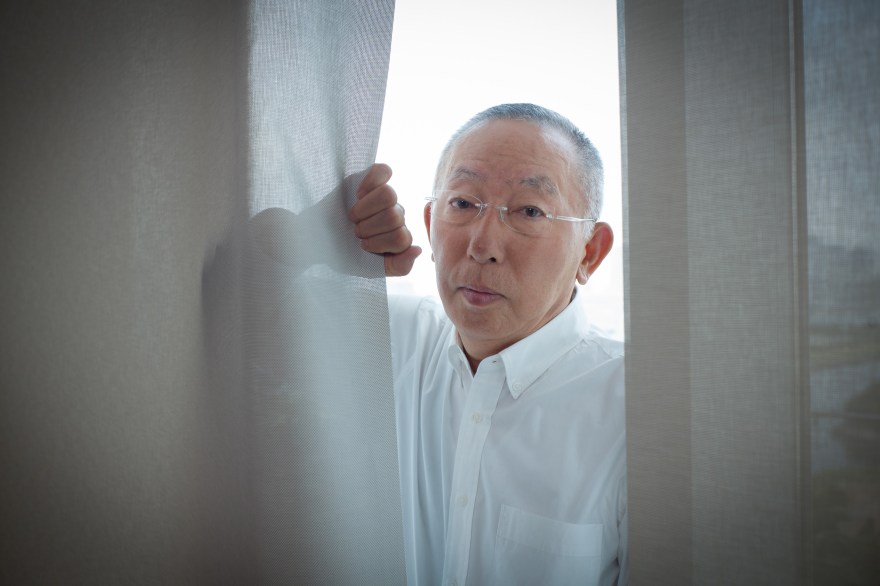
The billionaire founder of Uniqlo has revealed that he would prefer his successor to be a woman.
During an interview published by Bloomberg, Tadashi Yanai, the CEO and founder of Uniqlo and its parent company Fast Retailing Co, said he feels “the job is more suitable for a woman” than another man.
Tadashi Yanai, who holds the title of the richest man in Japan, with a net worth of £20.2bn, hopes his successor is a woman because “they are persevering, detail-oriented and have an aesthetic sense” and are therefore better suited to run a retail company.
The most likely option for future CEO is Maki Akaida. Akaida joined the company in 2001 and is currently in charge of Uniqlo’s Japan operations, which is the profitable unit of the business. Yanai confirmed “It’s a possibility” that Akaida will soon take over.
Yanai’s preference for a female CEO also comes from his want to increase the ratio of female senior executives in the company to more than half. In 2018, his company achieved its goal of having women in more than 30% of its management positions.
Despite Yanai’s commitment to gender diversity, Japan is still massively behind when it comes to employing women in management roles, with only 4% of executive positions being held by women.
Prime Minister Shinzo Abe has backed the motion to encourage female professionals due to the labor shortage Japan is experiencing. According to the National Institute of Population and Social Security Research; as birthrate continues to decline, population will drop by almost a third by 2060, by which 40% will be 65 or over. In response to this threat Yanai has said: “We’re in the business of selling clothes — it’s not so good that we’re old.”
Fast Retailing plans to invest £1.3 million in a partnership with the International Labour Organization (ILO), an arm of the United Nations, to help support factory workers in Indonesia. This follows complaints issued by worker rights campaigners, with the Fair Labor Association, against Fast Retailing over the failed settlement of wage and severance payments at the Jaba Garmindo factory in Indonesia.
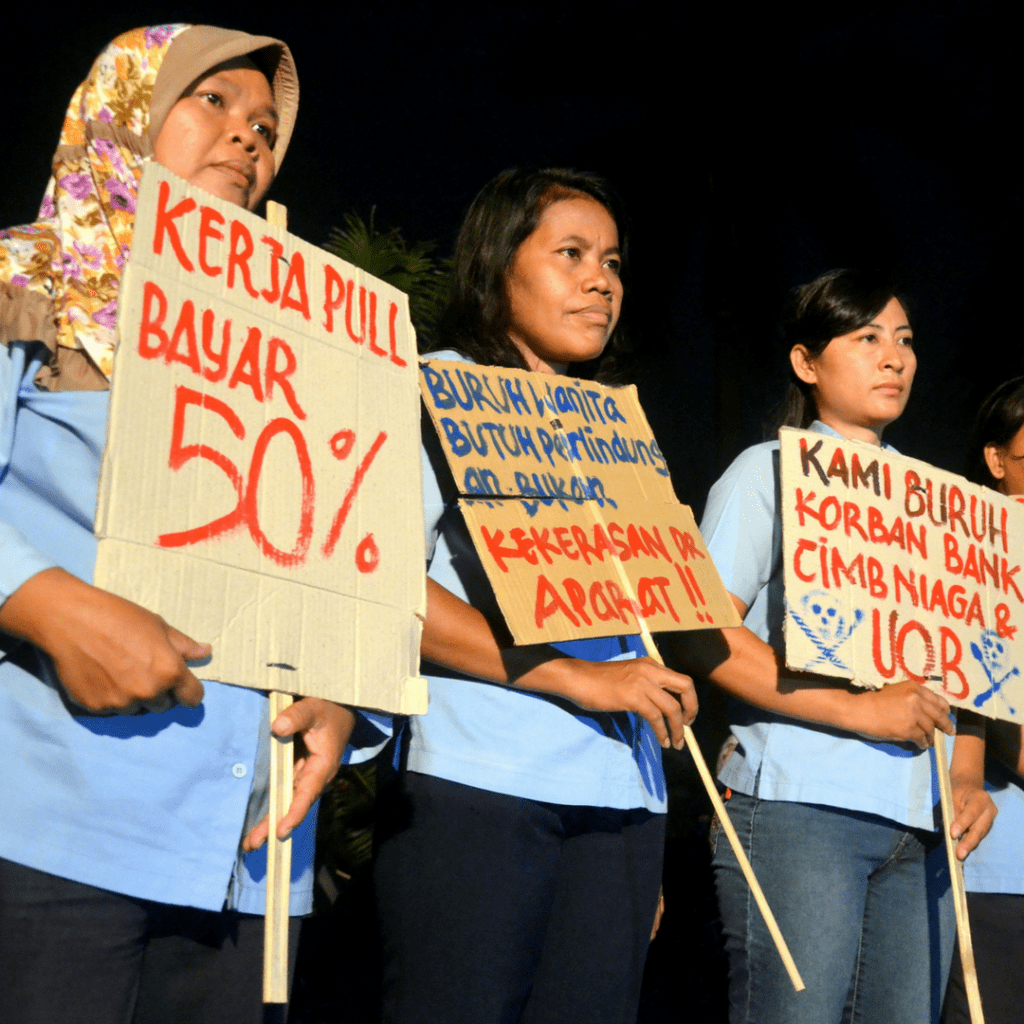
Credit: Clean Clothes Campaign
The closure of the Jaba Garmindo factory in April 2015, affected 2,000 workers. The factory was a major supplier of Uniqlo clothing between 2012 and 2014.
Clean Clothes Campaign says Uniqlo retained about 50% of the factory production volume in 2014. Workers have reportedly said the arrival of Uniqlo led to overly ambitious targets, forced overtime, and intense work pressure. “Uniqlo keeps saying it has no legal obligation to pay what is owed to the Jaba Garmindo workers, and that is exactly the problem – there is a legal accountability vacuum in the garment industry,” says Mirjam van Heugten from Clean Clothes Campaign.
She continues: “Uniqlo should not be able to buy credibility through recent partnerships with the ILO and UN women while simultaneously ignoring the voice of thousands of women workers whose labour made them one of the most profitable brands in the world. Now it is up to the FLA to ensure these brands are held accountable for the promises they made to respect garment workers’ rights in their supply chain.”
Jaba Garmindo workers claim £4.2m is owed in outstanding severance payments.
The ILO will conduct a study in other countries where Fast Retailing has contract factories to identify ways to improve social protections for garment workers.
Yanai said such investments are a way to both achieve business goals and contribute to the world, as upward mobility in developing countries would eventually boost Fast Retailing’s profits.
 Business of Future Retail