Calvin Klein Kind’s Commitment to Sustainability

It is our goal at Calvin Klein Kind to communicate, our commitment of being an entirely ethical and sustainable range, to our conscientious consumer.  

Calvin Klein take the safety and security of our workers very seriously. We carry out unannounced audits at least once a year at our factories to make sure manufacturers abide by our ethical standards. It is our priority to make sure our garments feel comfortable and secure in their workplace. Afterall, our excellent garments can only be produced through excellent standards. 

The Calvin Klein Kind range is manufactured in Turkey by the countries extremely talented artisans. We consciously decided to manufacture in Turkey because of their specialty in highly skilled tailoring and knitwear; but more importantly garments worker are paid fairer wages in comparison to the workers in manufacturing countries. Workers are exploited due to the extremely low minimum wages in these developing countries, which is Calvin Klein Kind is resolutely against. 

A unique selling point of our range is that we have utilised new and technologically advanced materials in our six-piece workwear collection. This was done in effort to promise our customers all our items are vegan and biodegradable, as they are derived from natural sources. This ensures that when the garment comes to the end of its long life, it can be easily renewed and not contribute to the rapidly growing pile of unsustainable clothing in landfill. 

To combat the ever-growing pile of clothing in landfill, Calvin Klein Kind are launching a repairs service for our garments. The purpose is to encourage our customers to repair, reuse and\or resell their unwanted garments and improve their life cycle. This is integral to stimulating a circular economy and reversing the effects of climate change. 

At Calvin Klein we understand the importance for education of all children around the world, as Education is the key to a better and brighter future. Therefore, we promise that a percentage of proceeds from our Calvin Klein Kind range will be utilised to support educating the children of dedicated garment workers in manufacturing countries. When you as a consumer purchase an item from Calvin Klein Kind, you’re doing your bit for the world; as with every product sold, another child gets an opportunity to learn. 
New Uniqlo CEO will be Female and Garment Workers Demand Severance

The billionaire founder of Uniqlo has revealed that he would prefer his successor to be a woman. 

During an interview published by Bloomberg, Tadashi Yanai, the CEO and founder of Uniqlo and its parent company Fast Retailing Co, said he feels “the job is more suitable for a woman” than another man.

Tadashi Yanai, who holds the title of the richest man in Japan, with a net worth of £20.2bn, hopes his successor is a woman because “they are persevering, detail-oriented and have an aesthetic sense” and are therefore better suited to run a retail company.

The most likely option for future CEO is Maki Akaida. Akaida joined the company in 2001 and is currently in charge of Uniqlo’s Japan operations, which is the profitable unit of the business. Yanai confirmed “It’s a possibility” that Akaida will soon take over.

Yanai’s preference for a female CEO also comes from his want to increase the ratio of female senior executives in the company to more than half. In 2018, his company achieved its goal of having women in more than 30% of its management positions.

Despite Yanai’s commitment to gender diversity, Japan is still massively behind when it comes to employing women in management roles, with only 4% of executive positions being held by women.

Prime Minister Shinzo Abe has backed the motion to encourage female professionals due to the labor shortage Japan is experiencing. According to the National Institute of Population and Social Security Research; as birthrate continues to decline, population will drop by almost a third by 2060, by which 40% will be 65 or over. In response to this threat Yanai has said: “We’re in the business of selling clothes — it’s not so good that we’re old.”

Fast Retailing plans to invest £1.3 million in a partnership with the International Labour Organization (ILO), an arm of the United Nations, to help support factory workers in Indonesia. This follows complaints issued by worker rights campaigners, with the Fair Labor Association, against Fast Retailing over the failed settlement of wage and severance payments at the Jaba Garmindo factory in Indonesia.

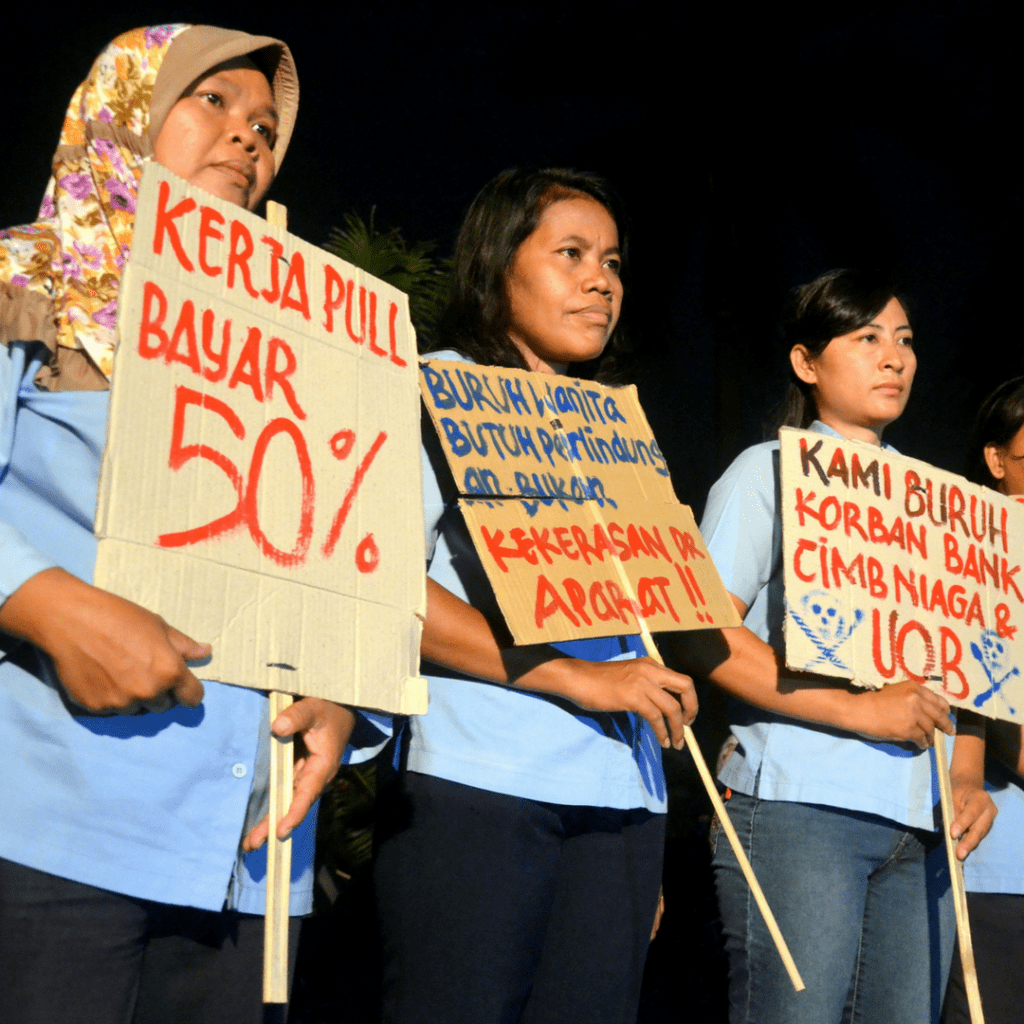
Indonesian garment workers Protest
Credit: Clean Clothes Campaign

The closure of the Jaba Garmindo factory in April 2015, affected 2,000 workers. The factory was a major supplier of Uniqlo clothing between 2012 and 2014. 

Clean Clothes Campaign says Uniqlo retained about 50% of the factory production volume in 2014. Workers have reportedly said the arrival of Uniqlo led to overly ambitious targets, forced overtime, and intense work pressure. “Uniqlo keeps saying it has no legal obligation to pay what is owed to the Jaba Garmindo workers, and that is exactly the problem – there is a legal accountability vacuum in the garment industry,” says Mirjam van Heugten from Clean Clothes Campaign.

She continues: “Uniqlo should not be able to buy credibility through recent partnerships with the ILO and UN women while simultaneously ignoring the voice of thousands of women workers whose labour made them one of the most profitable brands in the world. Now it is up to the FLA to ensure these brands are held accountable for the promises they made to respect garment workers’ rights in their supply chain.”

Jaba Garmindo workers claim £4.2m is owed in outstanding severance payments.

The ILO will conduct a study in other countries where Fast Retailing has contract factories to identify ways to improve social protections for garment workers.

Yanai said such investments are a way to both achieve business goals and contribute to the world, as upward mobility in developing countries would eventually boost Fast Retailing’s profits.

Selfridges introduces Robot Barista and Bartender

Selfridges are stepping up their innovation and have introduced a robotic bartender and barista.

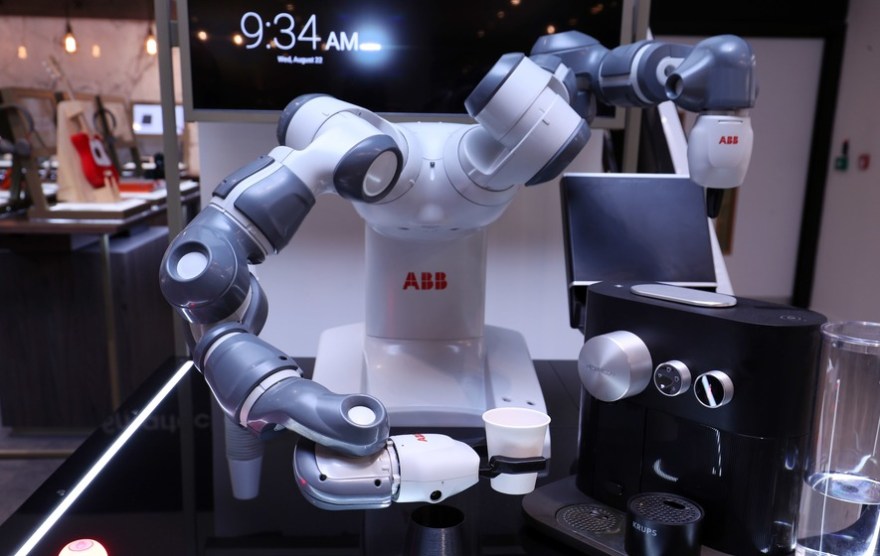
The coffee making robot, ‘YuMi’ is created by tech company ABB and can be found on the lower ground floor, within the technology department. YuMi finds your cup, turns the coffee machine on and adds the espresso capsule. If that’s not enough, YuMi also performs dance moves between each coffee, for your entertainment. 

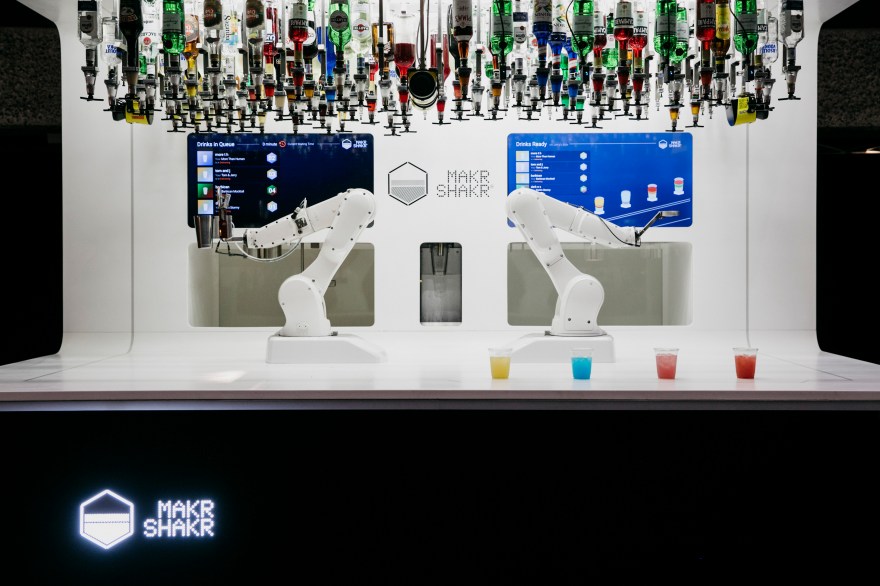
Following the success of the coffee robot, Selfridges has added a bartending robot to the mix, for the holiday season. This robot is created by Makr Shakr and can also be found on the lower ground floor, in technology. The robot serves a wide variety of drinks to Christmas shoppers. 

Credit: The Drinks Business

To order, simply download the Makr Shakr app, and pick from a variety pre-made mixes or create your own. All cocktails will be made fresh and served in a reusable cup. Age is verified by customers scanning their ID in the app. 

Following a general consumer survey only 11% are interested in customer service robotics, so it’s no surprise that the reviews for the robot barista and bartender have been mixed. Some find the idea fascinating; while others find it slightly disturbing.

Although the concept is intriguing now, I believe once the novelty has worn off, Selfridges will see customers become disinterested. It seems they also saw this coming as the robot bartender will only be in-store until February 2020.

Results from the survey conducted found that consumer prefer for the developments within technology to take place behind the scenes in order to improve systems and logistics. Consumers want technological advances to be used to create more personalised and smooth service within store.

Brand Case Study: Ted Baker

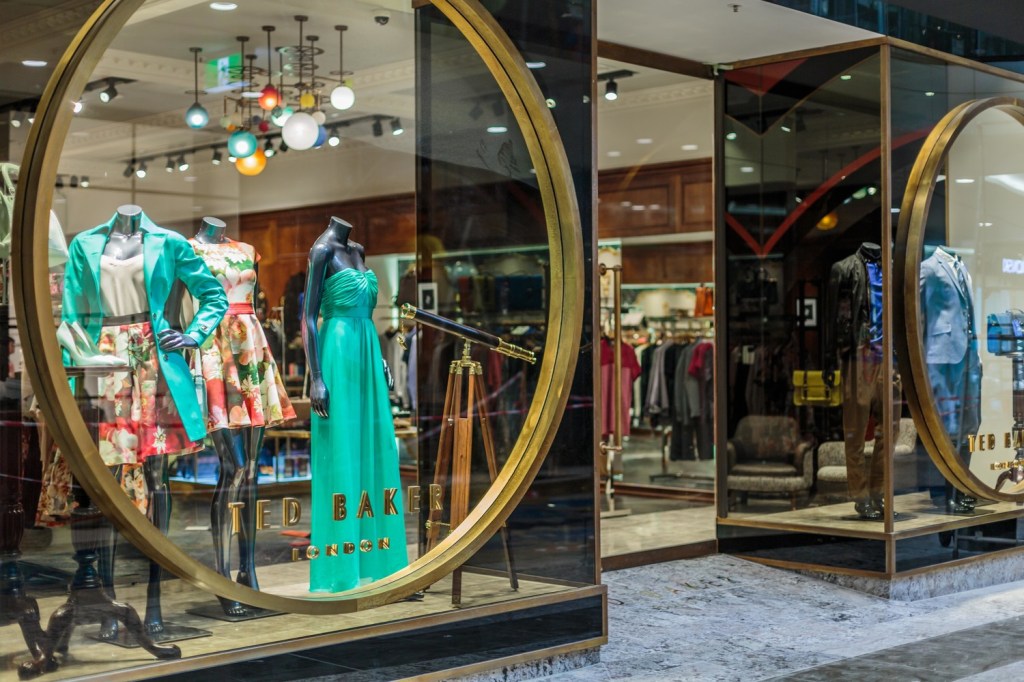
Since being established in 1988, Ted Baker have established a recognised brand image. Ted Baker has 544 locations worldwide, including concessions in popular department stores such as Selfridges, Fenwicks and John Lewis. They are widely known for their feminine, floral yet quintessentially British clothing and accessories. However, their product portfolio also includes men’s, children and homeware, as well as perfumes, watches and toiletries. 

For many years Ted Baker has been going strong. In fact, they only released their first advertising campaign last year, to mark their 30-year anniversary. This is because the success of their concessions has meant that they have been able to reach out to their target customer and promote their products, without spending on their own advertising. 

Unfortunately, sales have taken a turn for the worst as Ted Baker has reported a 194% plunge in pre-tax profits. This equates to a loss of £23 million for the first half of the financial year. The main cause for the drop of sales is lack of footfall in the brick and mortar stores. Teb Baker blame the lack of customers on ‘very difficult trading conditions’. This is reference to the tough competition amid the unseasonable weather the West has been experiencing. 

Another factor for the plunge in sales is the struggles of department stores Ted Baker has concessions in. These troubled department stores include Debenhams, House of Fraser, Nordstrom and Bloomingdale’s in the US. For example, Ted Baker lost £600,000 from its House of Fraser concessions alone.  

Credit: Ted’s Store Portfolio

Although Ted Baker chalks their problems up to their physical locations, retail analyst for Global Data, Emily Salter, points out that Ted Baker also faced a ‘worrying’ 1.3% drop in ecommerce revenue. As such, the problems must also lie within the brand themselves. 

One of these problems could be the controversy following the resignation of CEO Ray Kelvin. He resigned due to pressure following allegations of sexual harassment within the workplace. He is now under investigation but denies the numerous HR-complaints. This situation could have been a factor in the major decline in sales, as it relates the #metoo movement which has been very prominent in the media. Society has become very unforgiving to any individual or brand accused of sexual misconduct. It seems customers have refused to shop at Ted Baker following this investigation. 

Ted Baker now hope to persevere through this tough time and have laid out the steps they will take to improve sales. For example, they have just signed deals to expand in the Asian market, China and Japan, where there is high purchasing power due to the emerging economies. They have also developed licensing to sell childrenswear in Next; in replacement of Debenhams where sales had been rapidly declining.  Their biggest hope is the recent acquisition of No Ordinary Shoes Ltd for £20.3million. This is an opportunity to drive further growth in footwear business and is expected to increase revenue of Ted Baker from the new financial year.